
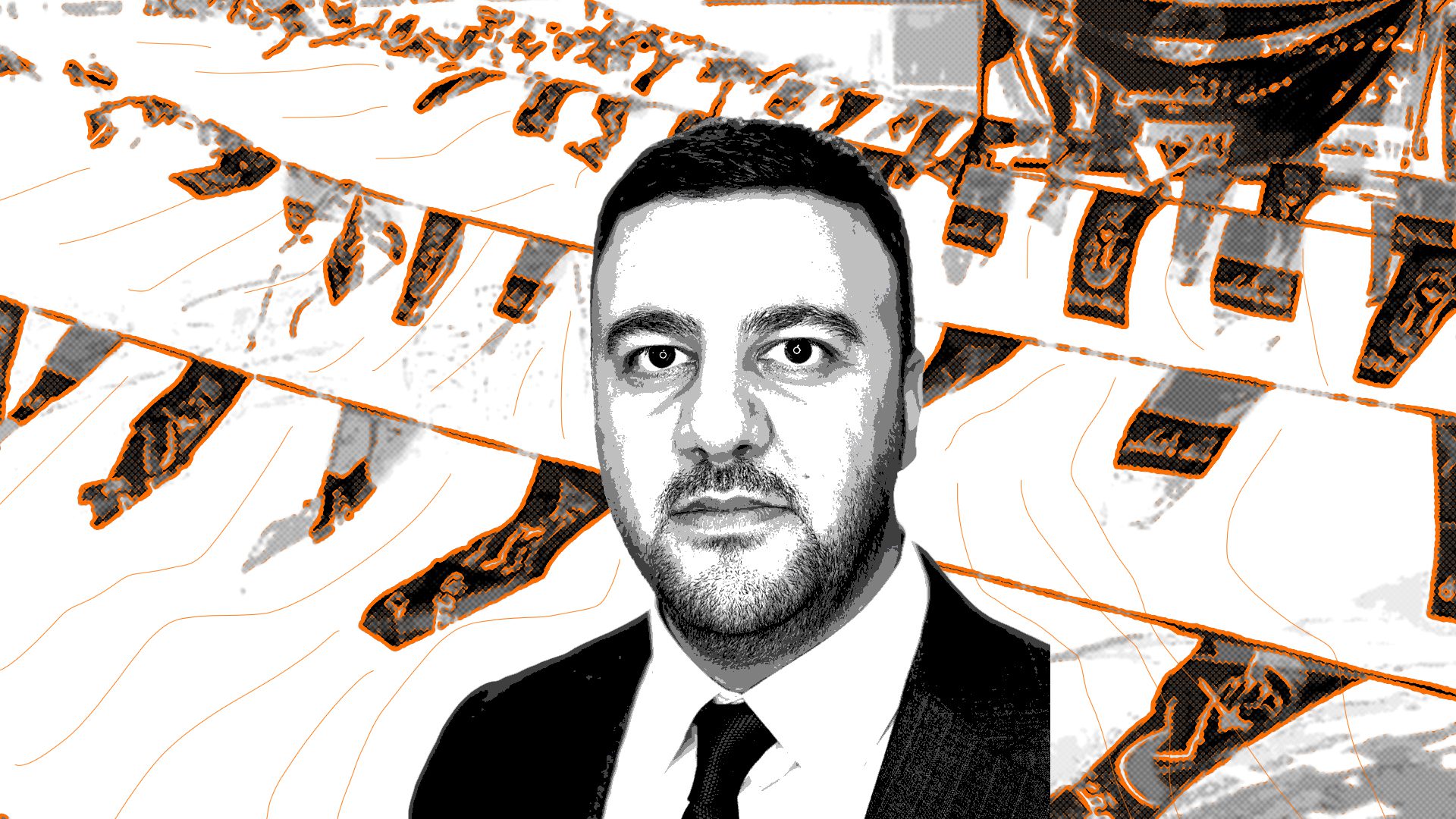

As Iraq heads toward another parliamentary election amid widespread political fatigue and growing distrust, questions of reform, legitimacy, and accountability once again dominate public debate. In this interview, Jummar spoke with Sajad Jiyad, a fellow at Century International and director of the Shia Politics Working Group.
Based in Baghdad, Jiyad is a political analyst and managing director of Bridge, an Iraqi nongovernmental organisation and consultancy focused on development projects for young people. His work centres on public policy and governance in Iraq, and he is frequently cited as an expert commentator on Iraqi affairs.
With a background in economics, politics, and Islamic studies, Jiyad reflects on the upcoming 2025 elections, the enduring legacy of the Tishreen uprising, and whether Iraq’s political system can still deliver the reform and accountability citizens have long demanded.
Jummar: What specific reforms should Iraqi voters be watching for in these elections, especially in terms of governance, accountability, and anti-corruption efforts?
Sajad Jiyad: Iraqi voters should closely monitor several specific reforms and challenges in the 2025 elections, particularly those affecting governance, accountability, and anti-corruption efforts. These include changes to the election law, the integrity of the campaign process, institutional reforms for accountability, and tangible anti-corruption measures.

The elections are being held under a revised version of Election Law No. 9 of 2020, which restores larger electoral districts and the Sainte-Laguë proportional system, raising the threshold for independent candidates and favouring larger, established political blocs.
The return of this law reduces space for new movements and independents that previously drove reforms after the 2019 protest movement; voters should monitor calls and promises for further decentralization and a reversal of these restrictive changes.
There is widespread public pressure for transparency in government formation processes, with greater scrutiny on how coalitions and elite bargaining will impact the distribution of power and ministerial appointments.
Oversight by the Independent High Electoral Commission (IHEC) is under scrutiny, with lessons from past complaints about logistical failures, interventions, and transparency; the public should look for concrete proposals to increase the legal authority and resources of the IHEC, as well as robust participation by international observers.
Monitor reforms are pushing for special judicial bodies to investigate electoral corruption, vote-buying, and bribery, along with recommendations for a hotline to report threats and the publication of guilty entities to increase public and media pressure.
Calls exist for parliament to amend the Political Parties Law, imposing financial penalties on entire political entities—not just individuals—for systematic electoral misconduct, as well as potential suspension or revocation of eligibility for violators.
Candidates are being scrutinised for the misuse of state property, vote buying, and financial manipulation; voters should demand clear platforms on anti-corruption measures, including proposals to create or empower specialist judiciary bodies to expedite such cases.
There are urgent recommendations for security forces and the electoral commission to impose tougher penalties for campaign vandalism, early campaigning, and the politicization of public resources.
Civil society monitors also urge reforms ensuring that government formation does not revolve around material and security interests controlled by entrenched blocs but instead promotes merit-based appointments and transparent revenue-sharing, especially with minority regions.
J: To what extent do you think the promises of reform made since the Tishreen uprising have been institutionalised—or have they mostly remained rhetorical? Do you see any of the demands of the Tishreen movement reflected in the current elections?
SJ: Most promises of reform made since the Tishreen uprising have not been deeply institutionalised and remain largely rhetorical, despite some tangible impact on the political environment and modest legislative changes.
While early parliamentary elections, a revamped election law, and the appearance of new protest-driven parties in parliament were real outcomes, the foundational demands of the Tishreen movement—overhauling the corrupt, sectarian muhasasa (sectarian power-sharing) system, promoting genuine accountability, and combating impunity—have met entrenched resistance from ruling elites.
The demands of the Tishreen movement—accountability, ending corruption, moving past the sectarian muhasasa, and reforming Iraq’s power structure—are present in the discourse surrounding the 2025 elections, but they have been diluted and largely sidelined by established elites.
While some electoral reforms and new parties stemmed directly from the protest movement, much of the momentum for deep change has been absorbed or neutralised by traditional forces.
J: How do security concerns and the economic situation shape voter turnout and political engagement in today’s Iraq?
SJ: Security concerns and Iraq’s fragile economic situation have sharply reduced voter turnout and dampened political engagement, making public participation highly dependent on feelings of safety, prospects for improvement, and faith in the electoral system.
Analysts expect one of the lowest turnouts in Iraq’s post-2003 elections due to ongoing violence, repeated intimidation of candidates, and widespread economic disillusionment.
J: Do you see clear differences between Baghdad and the peripheries when it comes to political participation and election dynamics?
SJ: Yes, there are clear and significant differences in political participation and election dynamics between Baghdad and Iraq’s peripheries.
Baghdad functions as the country’s main electoral battleground, with intense competition among national parties and high political stakes, while the peripheries exhibit unique patterns shaped by local power structures, security dynamics, and varieties of political mobilization.
J: Voter apathy remains strong, but what could drive participation in these or in future elections?
SJ: Voter participation in Iraq’s elections is currently hampered by disillusionment, but several factors could reignite turnout in these or future cycles. The most impactful drivers include genuine political competition, meaningful reforms, inspirational leadership, tangible improvements in everyday life, and technical election system enhancements—all of which could restore faith and engagement.
Genuine Reform and Accountability: If election platforms or government reforms convincingly address anti-corruption, improved services, accountability for violence against protestors, and breaking elite patronage, voters will be more likely to participate as they see real stakes and hope for change.
Political Competition and Alternatives: The emergence of credible opposition, new political coalitions, or unity among reformists can energize voters who otherwise feel traditional blocs will always dominate.
Leadership and Mobilization: Charismatic figures like Muqtada al-Sadr, whose directives can swing votes or boycotts en masse, show the power of trusted leadership in driving turnout—either through excitement or protest-conscious participation.
Improved Election Integrity: Practical fixes, such as replacing biometric cards with a unified national card, streamlined voting procedures, and impartial oversight could substantially raise turnout by making voting more secure, accessible, and trustworthy.
Tangible improvements—jobs, reliable electricity, social support, and local development—drive engagement as citizens see direct impacts from voting outcomes on their daily lives.
Threats to community interests, sectarian dynamics, or high-profile local conflicts can also spur turnout out of urgency or self-preservation, especially in regional hotspots.
Greater youth participation hinges on platforms that speak directly to young people’s concerns and future prospects, rather than party interests alone.
Boycotts as protest—while emotionally resonant—rarely upend elite power unless combined with organised, collective action and clearer political alternatives.
Without major changes to election rules or visible progress, many still view voting as futile; this can only change if candidates and institutions tangibly address past failures and openly commit to reforms with community buy-in.
J: What role do external actors—such as Iran, the U.S., or other regional powers—play in shaping the outcomes of Iraq’s elections, directly or indirectly?
SJ: External actors—especially Iran, the U.S., and some regional powers—play a persistent but evolving role in shaping the outcomes of Iraq’s elections, both directly and indirectly.
Their influence operates through party funding, candidate selection, security arrangements, media, and high-level statecraft, though the extent and style of intervention fluctuates with shifting regional dynamics and Iraqi public sentiments.
J: Do you think independent candidates and smaller civic groups have any real chance to disrupt the dominance of the established parties?
SJ: Independent candidates and smaller civic groups face a very challenging environment in Iraq’s 2025 elections, with limited real chances to disrupt the dominance of established parties. Systemic barriers, recent electoral law changes, elite co-optation, and patronage networks heavily favour major blocs, making it extremely difficult for independents or reformist civic groups to gain sustained influence.
J: What are the biggest obstacles to building public trust in the electoral process, and can these elections change that perception in any way?
SJ: The biggest obstacles to building public trust in Iraq’s electoral process include entrenched elite control, perceived corruption, flawed electoral laws, low institutional transparency, and fears of political violence. These factors combine with longstanding economic grievances and weak public services to deepen scepticism about whether elections can bring meaningful change.
J: In the long run, do you see elections in Iraq as reinforcing the current elite power-sharing system, or do they still carry potential for genuine transformation?
SJ: In the long run, elections in Iraq have predominantly reinforced the existing elite power-sharing system, often reproducing sectarian patronage networks and entrenching established political blocs. However, despite these structural constraints, elections still hold potential for genuine transformation, especially if coupled with sustained civic mobilisation, institutional reform, and increased accountability.